 article guide
Best Christmas Towns to Visit in America
Compare Christmas towns in America for lights, markets, snow, and family trips, with honest guidance on dates, weather, crowds, and costs.
Compare U.S. spring trips for wildflowers, cities, coast, and parks, with honest advice on weather, crowds, timing, and budgets.
17–22 minute read
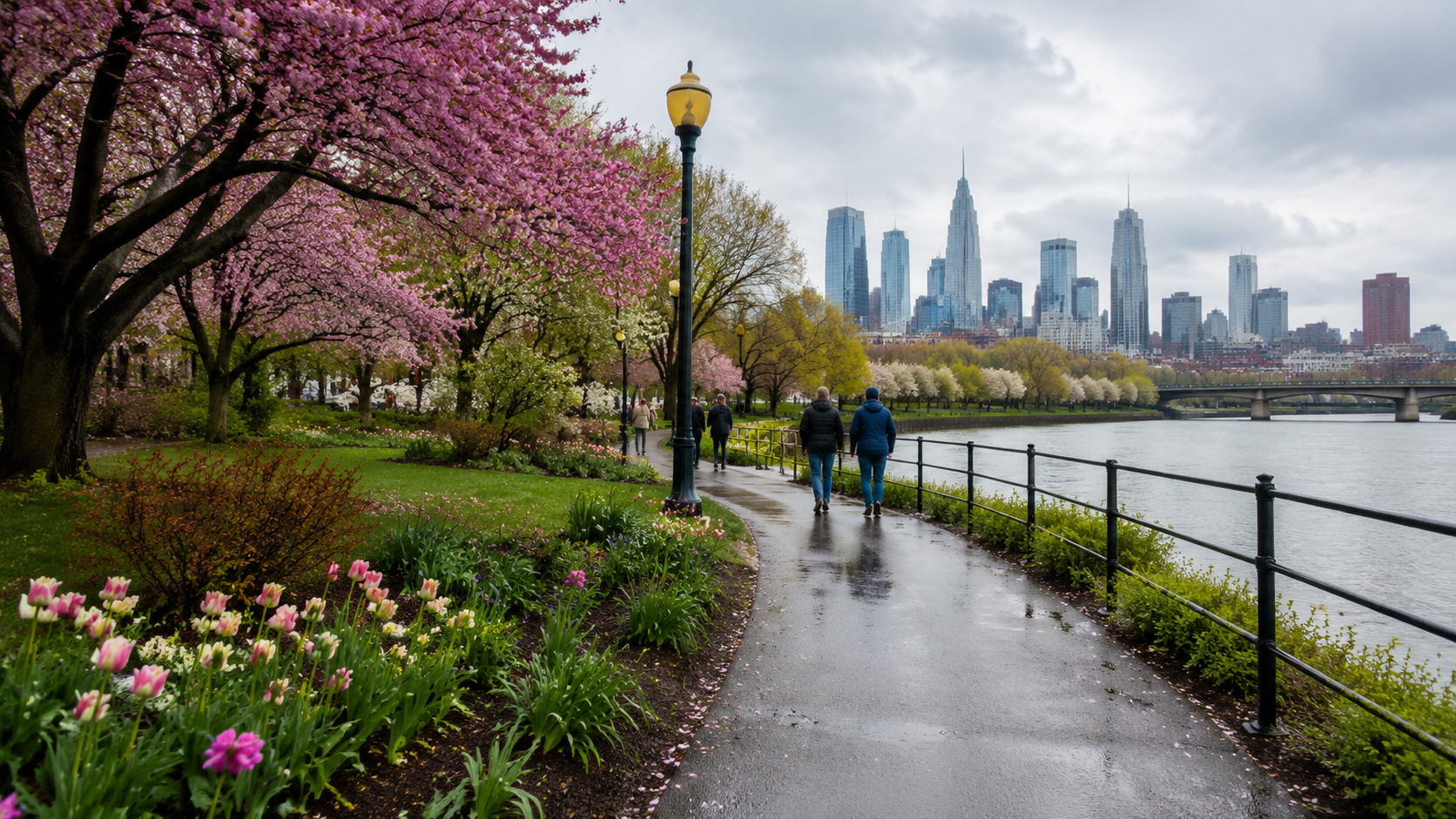
Washington, D.C. is easy to navigate without a car and remains interesting if bloom timing or rain changes the outdoor plan.
Consider the Great Smoky Mountains, Texas Hill Country, or California desert parks after checking current trail, bloom, and weather reports.
No. School breaks, festivals, graduations, major events, and limited park lodging can raise demand.
Quick answer: Choose Washington, D.C. for a car-free mix of museums and outdoor color; Great Smoky Mountains for layered mountain scenery; Texas Hill Country for a road trip; Savannah and Charleston for walkable historic districts; San Diego for coast and city options; or Utah and California desert country for dry-land landscapes before extreme summer heat. Spring moves north and uphill, so the right date is specific to the place—not to the season printed on a calendar.
A useful spring trip cannot depend on one flower, one sunny afternoon, or one famous photograph. Build around a destination you would enjoy in rain or after petals fall. If choosing still feels abstract, the Travel Compass turns budget, pace, interests, and transportation comfort into a more focused shortlist.
The list favors places where the season changes the experience without becoming its only reason to visit. It includes public-transit cities, road-trip landscapes, mountains, coast, historic districts, and arid parks. That range is more useful than declaring ten places universally “best.” A traveler managing pollen, mobility, uncertain weather, or a short weekend needs a different answer from a photographer with flexible dates.
We also considered fallback value. Washington has museums when rain arrives. San Diego has neighborhoods and cultural attractions when the beach is cool. The Smokies offer gateway communities and scenic drives when a longer trail is unsuitable. No destination eliminates risk, but each allows a sensible Plan B.
| Destination | Strongest fit | Typical trip | Transportation reality | Watch for |
|---|---|---|---|---|
| Washington, D.C. | Museums, gardens, car-free days | 3–4 days | Transit and walking | Bloom crowds, school groups, rain |
| Great Smoky Mountains | Waterfalls, woods, varied elevation | 3–5 days | A car is usually practical | Storms, trail and road status |
| Texas Hill Country | Wildflower-season road trip | 3–4 days | Car needed for a broad loop | Bloom variability, private land |
| Savannah and Charleston | History, food, garden atmosphere | 3–5 days | Compact cores; transfer between cities | Heat, storms, event demand |
| San Diego | Coast plus city flexibility | 3–5 days | Car optional for a focused plan | Marine layer, cold water, distances |
| Utah parks | Hiking before peak heat | 4–7 days | Car; shuttles in some parks | Cold nights, permits, crowds |
| California deserts | Desert landscapes and possible blooms | 3–5 days | Car and preparation essential | Heat, wind, bloom uncertainty |
| New York City | Parks, culture, food | 3–5 days | Excellent transit | Walking, rain, event prices |
Spring color adds atmosphere to the National Mall and neighborhoods, but cherry blossoms are a brief natural event rather than an appointment. Forecasts evolve, individual trees differ, and wind or rain can shorten the display. Reserve a trip because the museums, monuments, food, and neighborhoods appeal too. Then regard any peak bloom as a bonus.
D.C. works especially well for travelers who prefer not to drive. Still, map the distance between stations and entrances: a “transit trip” can involve substantial walking and security lines. Group one or two nearby priorities each day. Free admission does not always mean no reservation, so confirm policies on official museum and government sites.
Wildflowers, streams, waterfalls, and fresh forest growth make the mountains compelling, but higher areas can remain wintry after valleys feel warm. Rain makes waterfalls impressive while also affecting footing, visibility, and river conditions. The Great Smoky Mountains weekend guide helps turn a huge park into a realistic route.
Choose one gateway and one scenic corridor rather than driving between every headline stop. Check National Park Service notices, parking rules, and road status. Wildlife needs distance; flowers stay where they grow. A shorter walk completed safely is better than forcing a trail because it appeared on an itinerary.
Central Texas can pair small towns, historic sites, state parks, wineries or breweries, and roadside color. Wildflower timing and intensity vary with rainfall, temperature, mowing, and land management. Pull over only where parking is legal and the ground is public or you have permission. Never enter private fields or stop on a fast shoulder for a photo.
Fredericksburg makes a practical base, while our hidden gems in Texas guide offers alternatives. Build a compact loop and assign a sober driver where relevant. Thunderstorms, flash flooding, heat, and festival demand all belong in the plan.
These cities reward unhurried walking, architecture, food, and serious engagement with history. Spring greenery can soften the streets before midsummer humidity, though warm days arrive early and pollen can be intense. Decide whether to pick one city or divide at least five days between both; a rushed overnight comparison rarely does either justice.
Seek museums and interpretation that address Indigenous, colonial, Black, and labor histories rather than reducing the region to attractive houses. Check accessibility of old buildings and uneven streets. A central stay may reduce car use, but price parking before assuming a rental is helpful.
San Diego fits travelers who want beaches without making swimming the sole objective. Coastal cloud, wind, cool water, and variable water quality can complicate beach plans even when inland neighborhoods are sunny. The San Diego weekend guide compares areas and transportation tradeoffs.
Pick adjacent neighborhoods and one coastal zone. The county is large; crossing it repeatedly wastes time. Parks, museums, food, and harbor views keep the trip worthwhile if the sand is chilly. Check lifeguard and public-health information before entering the water.
Spring may offer more manageable daytime conditions than summer, yet desert weather is not automatically gentle. Nights can freeze, exposed trails heat quickly, flash floods can occur far from visible rain, and popular parks may use current reservation or shuttle systems. Verify every rule directly.
A week supports two nearby park areas; a long weekend should usually choose one. Carry more water than an urban walk requires, understand route exposure, and turn around early. “Dry” does not mean weatherproof.
Desert blooms occur only when a sequence of conditions aligns, and online excitement can overwhelm delicate locations. Go for geology, scale, night sky, and adapted plant life, not a guaranteed superbloom. Stay on established surfaces, pack water, and keep vehicles on legal roads.
Distances, fuel, cell gaps, heat, and wind need explicit planning. Check park alerts and avoid copying a geotag that may point toward unsafe or closed terrain. Sunrise is not worth driving while exhausted.
Spring appears unevenly across the city’s parks and streets. That is an advantage: there is no need to chase one “peak.” Combine a park with a museum, neighborhood meal, performance, or architecture walk. The subway reduces car dependence but does not eliminate stairs, service changes, or long days on foot.
Choose lodging based on the neighborhoods you will actually visit and check the complete price. Major events and graduations affect demand. A single borough explored well can feel more satisfying than collecting landmarks across five.
Spring is often described as shoulder season, but that label hides local calendars. Cherry-blossom interest, school breaks, Easter timing, college graduations, festivals, park demand, and conventions can all create peak pricing. Compare two date windows using the same trip components. The weekend trip cost guide provides a worksheet approach without pretending one nationwide number is reliable.
Start with transportation and lodging, then add local movement, food, admissions, and a contingency category. A lower room rate outside the center may lose its advantage after parking and daily travel. Conversely, a road-trip base outside a park may be rational if it offers kitchens and flexible cancellation. Use current totals, not advertised “from” prices.
Spring is a transition, not a climate. Southern heat, mountain snow, severe thunderstorms, flooding, desert wind, coastal fog, and heavy rain can occur within this list. Review historical climate only for broad expectations; use an authoritative forecast close to departure. Allergy-sensitive travelers should check local conditions and discuss medical needs with an appropriate professional.
Pack layers and rain protection rather than one bulky outfit. Keep medication, a dry layer, and essential electronics protected. When lightning threatens, leave exposed viewpoints and water. Never drive across a flooded road. The travel packing checklist is a starting point, not a substitute for destination-specific gear.
Allow three nights for one city or compact rural base. Four or five nights make a park gateway or two-city regional trip more resilient. Southern Utah merits five to seven days if combining areas, because driving and changing lodging consume daylight. For a two-night weekend, choose one district, one outdoor priority, and one backup.
If flying, count usable hours after airport transfers rather than labeling arrival as “Day 1.” The weekend planning guide shows how to protect the final evening and avoid an overfilled schedule.
Choose a primary experience and two acceptable substitutes. Save official park, transit, and weather pages to your phone. Reserve the scarce pieces, but keep ordinary meals and walks flexible. Check cancellation deadlines on a calendar and inspect the forecast before each deadline passes.
Traveling with mixed interests? Ask each person to name one priority and one deal-breaker. A Personalized Travel Blueprint can help when dates, origin, mobility, and competing preferences make a generic list insufficient. Whatever you choose, slow down around communities coping with seasonal crowds and follow Leave No Trace principles outdoors.
See the answers below for timing, wildflowers, car-free choices, and packing.
Prices, weather, bloom timing, hours, roads, trails, reservations, permits, transit, events, and availability can change without notice. Verify decision-critical details with official providers and agencies before paying and again shortly before travel.
Compare another route, destination, or travel style before you book.
article guideCompare Christmas towns in America for lights, markets, snow, and family trips, with honest guidance on dates, weather, crowds, and costs.
 article guide
Compare America’s best fall getaways for foliage, mountains, cities, coast, and warmth, with realistic timing, budget, and weather advice.
 article guide
Compare U.S. summer vacations for beaches, mountains, cities, and parks, with practical guidance on heat, crowds, costs, and trip length.