 article guide
Best Fall Getaways in America
Compare America’s best fall getaways for foliage, mountains, cities, coast, and warmth, with realistic timing, budget, and weather advice.
Compare Christmas towns in America for lights, markets, snow, and family trips, with honest guidance on dates, weather, crowds, and costs.
17–22 minute read
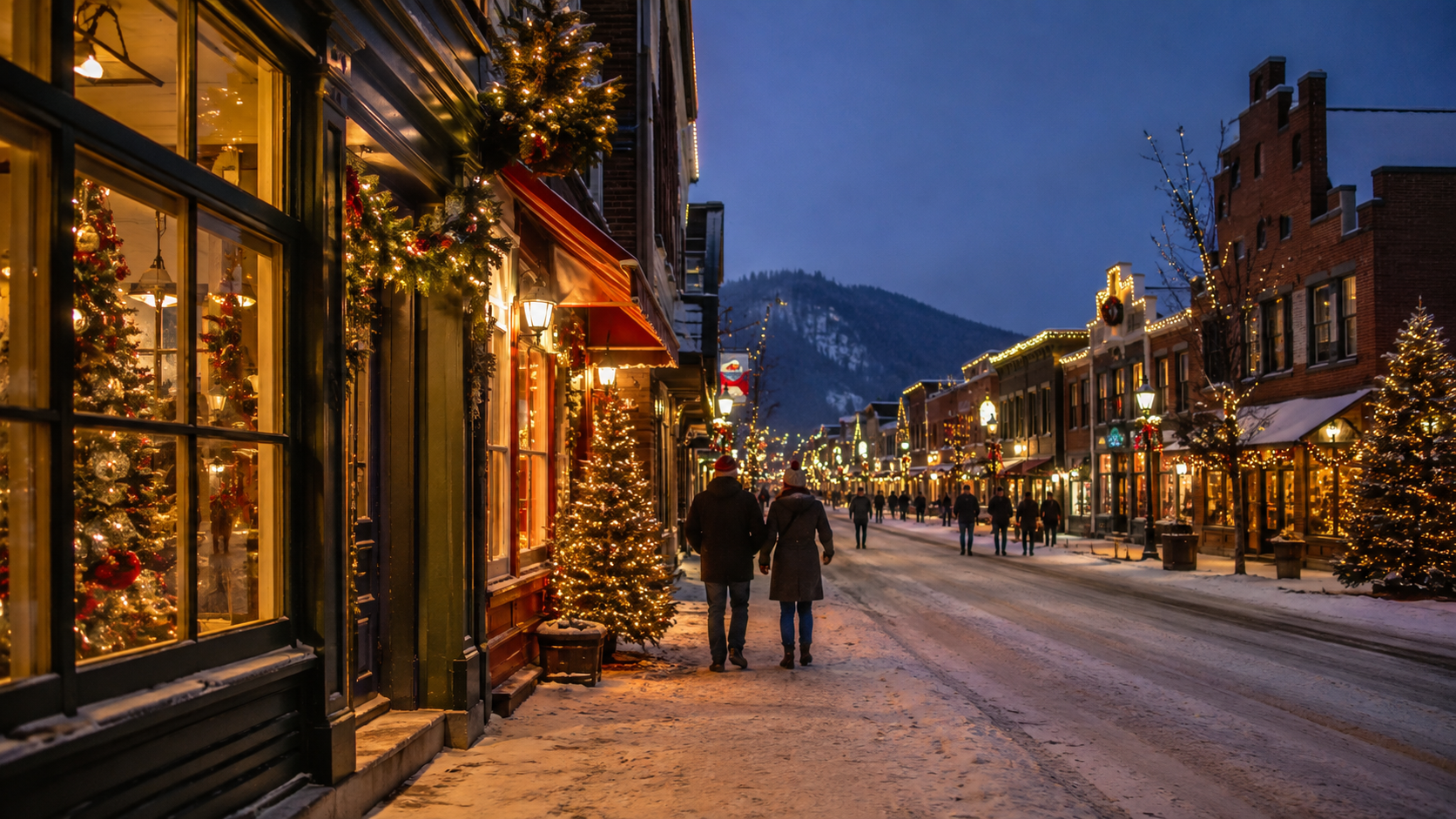
New York City is the clearest car-free choice; central Bethlehem and selected event areas may work after verifying regional connections.
None. Even colder mountain towns cannot guarantee snowfall for specific travel dates.
Check the official event calendar first, then reserve essential transportation and lodging with terms you understand.
Quick answer: Choose Bethlehem, Pennsylvania for history and events; Leavenworth, Washington for a mountain-town setting; Santa Fe for distinctive regional traditions; New York City for spectacle and transit; San Antonio for a milder river-city holiday visit; Newport, Rhode Island for historic houses; or Grapevine, Texas for a convenient family-focused base. The best choice depends on verified event dates—not the town’s marketing nickname.
Holiday travel is driven by exact calendars. Lights, markets, performances, and house tours may run only on selected dates, while weekends can change both price and crowd levels. Choose the event or atmosphere you want first, then confirm that it actually operates during your stay. Use the Travel Compass if you want help narrowing the fit.
These choices cover several kinds of holiday visit rather than repeating one photogenic formula. The list balances cities with rural landscapes, car-free possibilities with road holiday visits, active days with easy weekends, and famous places with alternatives that serve a specific holiday traveler well. Each Christmas town has enough depth to survive imperfect weather. Seasonal character matters, but it is never the only reason to go.
We favored practical differences: how long a visit needs, whether local transportation is manageable, what can derail the plan, and whether an indoor or lower-intensity alternative exists. “Best” therefore means a strong match for a stated purpose—not a ranking based on live reviews, prices, or personal anecdotes.
Use the disclosure below to collapse the table after you have made a shortlist. The holiday planning windows describe general patterns, not forecasts or promises.
| Christmas town | Strongest fit | Typical holiday visit | Transportation reality | Watch for |
|---|---|---|---|---|
| Bethlehem, Pennsylvania | History, markets, performances | 2–3 days | Regional transfer; focused core | Event dates, cold, parking |
| Leavenworth, Washington | Mountain-town setting | 2–4 days | Winter transport needs care | Snow/ice, road closures, crowds |
| Santa Fe, New Mexico | Regional traditions and art | 3–4 days | Compact center | Altitude, cold, event etiquette |
| New York City | Big spectacle and car-free variety | 3–5 days | Transit | Prices, walking, crowds |
| San Antonio, Texas | Milder river-city atmosphere | 2–3 days | Focused central visit | Cold fronts, peak dates |
| Newport, Rhode Island | Historic architecture | 2–3 days | Local transport holiday planning | Tour tickets, coastal weather |
| Grapevine, Texas | Family-oriented programmed events | 2–3 days | Car or transfer holiday planning | Schedules, parking, sellouts |
| Natchitoches, Louisiana | Lights and small-city heritage | 2–3 days | Car generally practical | Event traffic, rain, date specifics |
Bethlehem’s name, industrial history, cultural institutions, markets, and performances make it more than a lights stop. Exact programs, vendors, admission rules, and dates can change each year, so build from official calendars rather than a recycled “must-do” list.
A compact stay reduces parking moves, but regional arrival still needs holiday planning. Learn the city’s Moravian and industrial stories, allow indoor time, and do not assume every attraction is open every December day.
Leavenworth is known for a Bavarian-styled center framed by mountains. That visual appeal brings concentrated demand and genuine winter transport questions. Snow is possible, not guaranteed on the desired date.
Check official event and road information before reserving. Do not attempt a pass because a map says it is short; closures, traction requirements, ice, and driver experience decide whether the route is reasonable.
Santa Fe’s art, food, adobe architecture, and regional holiday customs create an experience distinct from generic decorated storefronts. Visitors should learn the meaning and etiquette of public traditions rather than treating ceremonies as staged content.
The city’s altitude and cold nights surprise holiday travelers. Allow a slower first day, verify event access, and support artists through reputable markets. Nearby mountain drives are optional, not mandatory.
Window displays, performances, markets, decorated streets, museums, and neighborhood traditions offer unmatched variety. They also create crowds and high demand. Choose two holiday anchors, not every famous display.
Transit helps, but stations, sidewalks, security queues, and road closures add walking and time. Compare lodging by full price and location. A museum or neighborhood meal protects the holiday visit when rain replaces snow.
Seasonal lights can pair with missions, museums, food, and riverfront time, allowing a holiday visit that remains valuable after decorations switch off. Cold fronts still occur, and headline dates may affect access and rates.
Use the San Antonio weekend guide to add substance beyond the displays. Confirm boat, performance, and lighting schedules with their operators and avoid assuming all of San Antonio is walkable.
Newport can combine decorated historic properties, coastal architecture, and a compact winter break. Tours may use timed admission, and preservation sites set photography, accessibility, and bag rules.
Coastal wind and storms can make a mild forecast feel harsh. Pick the houses or history experiences you actually value instead of racing through every ticketed interior.
Grapevine promotes a dense calendar of family events and provides proximity to a major airport region. That convenience does not mean every activity is spontaneous or free; dates, age fit, duration, parking, and tickets require comparison.
Choose one main event per day and protect meals and rest, especially with young children. The Dallas versus Fort Worth guide can help if the holiday stop is part of a broader North Texas visit.
Natchitoches pairs a long-running seasonal identity with a historic district and regional culture. A visit should engage with the place beyond a single nighttime photograph. Official schedules determine when major lighting and festival elements occur.
Event traffic and parking can transform an otherwise small-city holiday visit. Reserve only after confirming the chosen date, and keep rain protection and a safe late return in the plan.
Seasonal labels do not determine cost. Airfare and lodging respond to origin, day of week, school calendars, holidays, conventions, festivals, sporting events, and how much inventory exists. Compare complete current totals for at least two date windows. A room outside the center can require a rental car, parking, fuel, and more time; a higher central rate can sometimes reduce those costs.
Build the budget in five parts: transportation to the Christmas town, lodging with taxes and fees, movement after arrival, food, and activities. Then add a contingency amount appropriate to your situation. The weekend holiday visit cost guide and budget travel guide explain this method without offering a false nationwide price.
Spend deliberately on the holiday visit anchor, whether that is location, a particular event, or easier transportation. Save on elements that do not change the experience. Never assume a nonrefundable booking is a bargain until you understand what happens if weather, illness, or transportation disruption changes the holiday visit.
December can bring snow, ice, rain, coastal wind, mountain-pass closures, flight delays, and unexpectedly warm afternoons. Decorative “snowy town” imagery is not a forecast. Check sunset, because light displays create predictable surges after dark, and use official road information before any mountain transfer.
Historical averages help with broad packing choices but cannot settle a daily itinerary. Check an authoritative forecast close to departure, and use official park, road, transit, marine, wildfire, or emergency sources as appropriate. Conditions can differ sharply by elevation, shoreline, neighborhood, and hour.
Pack for the actual activity: adaptable layers, broken-in footwear, water, sun protection, and rain or cold protection as conditions require. The ultimate packing checklist is a prompt, not a universal prescription. When safety guidance conflicts with a reservation, protect people rather than the schedule.
Two nights suit one compact district or small-town base, especially when reached by a short drive. Three or four nights allow a city plus one day holiday visit or a park gateway with a weather buffer. Five to seven days make sense for regions where distances are large or changing lodging is genuinely useful. Do not turn a short break into a survey of an entire state.
Count usable time rather than calendar labels. A late arrival and early departure leave little more than one day. If transportation consumes most of the visit, choose a closer Christmas town from the weekend getaways under $500 guide or adjust the holiday visit length.
Another frequent error is copying an itinerary without checking why it worked for its creator. Mobility, starting location, daylight, interests, and booking conditions differ. Use examples as frameworks, then remove anything that does not support your holiday visit.
Begin with official tourism, venue, city, and transportation calendars. Write down operating date, admission requirement, cancellation policy, parking or shuttle plan, accessibility information, and last entry for each anchor. Then choose lodging that reduces evening driving. Compare this themed holiday visit with a general how to choose a vacation Christmas town framework so atmosphere does not obscure practical fit.
Keep one indoor, sheltered, or lower-intensity alternative for each important outdoor day. Download confirmations and a map, share the plan with your group, and put cancellation deadlines on the calendar. Reserve scarce essentials before optional extras. Recheck the route shortly before leaving rather than trusting an old saved post.
When the choices still feel tangled, a Personalized Travel Blueprint can account for origin, dates, pace, interests, and constraints. It should improve a decision, not encourage a busier itinerary.
The FAQ below addresses the most common timing, transportation, budget, and holiday visit-length questions for this season.
Prices, weather, hours, road and trail status, transit, permits, event schedules, entry rules, and availability may change. Confirm anything that could affect safety, access, or a nonrefundable purchase with the relevant official source before booking and again before departure.
Compare another route, destination, or travel style before you book.
article guideCompare America’s best fall getaways for foliage, mountains, cities, coast, and warmth, with realistic timing, budget, and weather advice.
 article guide
Compare U.S. spring trips for wildflowers, cities, coast, and parks, with honest advice on weather, crowds, timing, and budgets.
 article guide
Compare U.S. summer vacations for beaches, mountains, cities, and parks, with practical guidance on heat, crowds, costs, and trip length.