 article guide
Best Christmas Towns to Visit in America
Compare Christmas towns in America for lights, markets, snow, and family trips, with honest guidance on dates, weather, crowds, and costs.
Use this practical travel packing checklist for documents, clothing, toiletries, technology, health items, carry-ons, and trip-specific gear.
16–20 minute read
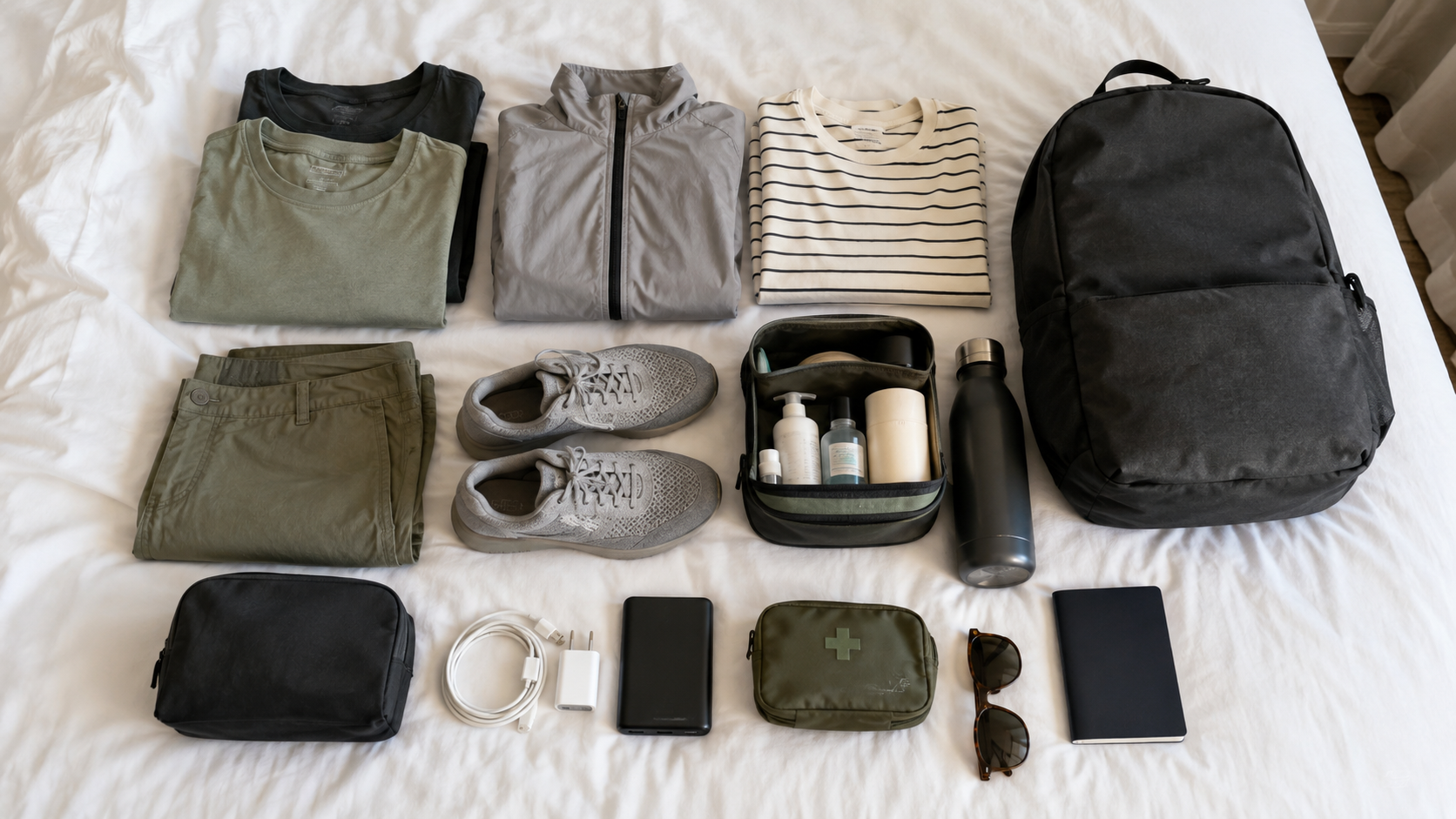
Documents, payment, medication, communication, suitable clothing, hygiene basics, and route-specific essentials.
Pack by planned activities and repeatable outfits, not by every situation you can imagine.
Items needed to travel, remain medically safe, communicate, and manage a delayed checked bag.
The ultimate packing list is not the longest list. It is a system that protects the essentials—documents, money, medication, communication, weather-appropriate clothing, and basic hygiene—then adds only what your route and activities require. Use this master checklist as a menu, not an instruction to pack every item.
Start at least a week before departure. Check the forecast again the day before, but pack for plausible conditions rather than one weather icon. Confirm luggage rules with each carrier because size, weight, liquids, batteries, tools, food, and mobility-device policies vary and change.
Before opening a suitcase, answer six questions: What will you do? What conditions are credible? Can you do laundry? What does the lodging provide? What are the carrier and destination rules? What must remain with you?
| Check | Why it changes the bag |
|---|---|
| Forecast and climate norms | Determines layers, rain, heat, and footwear |
| Activity list | Prevents speculative outfits and missing required gear |
| Laundry access | Reduces repeat clothing on longer trips |
| Carrier rules | Controls dimensions, weight, liquids, and batteries |
| Lodging amenities | Avoids duplicate towels, dryers, or toiletries |
| Health/access needs | Keeps necessary items central rather than optional |
Make a written list, lay everything out, and remove duplicates. Do not rely on memory for medication or documents. Photograph the packed bag for your own record without posting valuables publicly.
Check names and expiration dates well before departure. Some destinations impose passport-validity or blank-page requirements. Children, cruises, rental cars, international connections, and medication can add documentation. Verify with government agencies and providers, not a generic checklist.
Carry the payment methods you realistically need, ideally in more than one place. Tell the issuer about travel only if its current process recommends it. Know how to freeze a card and reach support. Bring a small amount of appropriate cash only when useful; avoid displaying or storing it all together.
Add keys, transit cards, loyalty details only when needed, and an emergency funds plan. Never place every card and document in a checked bag.
Pack by outfit formulas. For a moderate one-week trip with laundry, that could mean several tops, a few bottoms, underwear and socks suited to the traveler, sleepwear, one warm layer, one weather shell, and the shoes worn in transit plus at most one specialized pair. This is an example, not a universal count.
Do not debut painful shoes on a walking trip. Wear the bulkiest suitable pair during transit, but account for security procedures and swelling. Compression garments should be chosen with appropriate medical guidance when health conditions are involved.
For a fall route, layers must address the specific elevation and region; the U.S. fall destinations guide can help define the trip before you pack.
Use leak-resistant containers, label unfamiliar bottles, and follow current security limits. “Travel size” does not automatically mean permitted or suitable. Place liquids where a leak will not damage documents or electronics.
Keep prescription medication in the accessible bag, in accordance with the destination and carrier rules. Bring enough for the trip plus a reasonable disruption margin where permitted. Carry prescription or clinician information when required. International rules can differ substantially; research controlled medicines early.
A personal kit might contain bandages, blister care, pain or fever relief, allergy treatment, stomach remedies, motion-sickness support, masks, and sanitizer—but only products safe for you. Check interactions, expiration dates, and dosing with a qualified professional. Do not pack medication merely because it appears on an online list.
Include mobility, hearing, sensory, CPAP, diabetes, ostomy, or other medical supplies that apply. Distribute critical backups safely. Contact carriers and accommodations about power, refrigeration, batteries, or device handling rather than assuming.
Portable batteries and spare lithium batteries are commonly subject to specific carriage rules. Verify current limits directly. An adapter changes plug shape; it does not necessarily convert voltage. Check every device label before using a high-powered item abroad.
Update devices, enable a screen lock and account recovery, back up important data, and avoid unknown charging cables. Public networks may not be appropriate for sensitive transactions. A paper address and contact number remain useful if the phone fails.
The personal item or carry-on should allow you to complete the trip and manage a reasonable checked-bag delay:
Never check irreplaceable documents, essential medication, keys, fragile valuables, or batteries prohibited from checked baggage. Keep the bag within the physical and weight limits even if other travelers appear to exceed them.
Add a swimsuit, sun-protective clothing, tested sunscreen, hat, reusable water bottle, sandals appropriate to the surface, and a wet-item bag. Check whether towels and flotation equipment are provided. Reef or local product rules may apply. Water safety information matters more than accessories.
Use the official route conditions to determine footwear, traction, layers, water capacity, navigation, illumination, sun and insect protection, and emergency items. A short popular trail can still expose you to heat, cold, altitude, storms, wildlife, or darkness. Do not treat new gear as a substitute for experience and turnaround judgment.
Prioritize proven walking shoes, a weather layer, a secure everyday bag, transit payment, portable power, and attire for any reserved venue. A Dallas car-free plan shows why walking distance, heat, and transit hours affect what must stay accessible.
Add license and vehicle documents, charging or fuel plan, roadside contact, phone mount where legal, charging cable, water, weather equipment, and vehicle-specific emergency supplies. Inspect the vehicle and tires; do not let a packing list distract from maintenance or safe rest.
Add passport, visas or authorizations, suitable power equipment, communication plan, travel health preparation, and copies of essential information. Learn customs restrictions for food, medicine, plants, and equipment. The passport-free destination guide is an alternative when international documentation does not fit this trip.
Bring age-appropriate restraint and sleep items, feeding or diaper supplies, medication, comfort objects, entertainment, clothing changes, and documents. Confirm airline, hotel, rental-car, and destination rules. Adults must retain control of critical items rather than assigning them to a child’s bag.
Choose a color-compatible capsule, plan laundry, decant only safe products, and remove “just in case” items that are cheap and readily available at the destination—unless a specific health, fit, or access need makes replacement difficult. Share nonpersonal items only after agreeing who carries them.
Packing cubes organize; they do not reduce weight. Rolling can reduce wrinkles for some garments but does not change the carrier limit. Weigh the finished bag with a reliable scale and measure rigid dimensions. Leave a little space rather than planning to expand beyond the return limit.
The travel essentials page can help prioritize durable basics. Open Path does not recommend buying gear simply to feel prepared.
Use the Travel Compass before this stage if the destination itself is unsettled. For a route-specific plan that also clarifies what activities you are actually packing for, consider a Personalized Travel Blueprint.
It depends on laundry, climate, activity, and personal needs. Build repeatable combinations and count actual wear opportunities rather than packing seven unrelated outfits by default.
Either can work. Choose the method that keeps the bag organized and garments usable. Neither method changes weight, and compression may create an overweight dense bag.
Keep identification, keys, essential medication, valuables, fragile necessities, and anything prohibited from checked baggage with you. Confirm battery and dangerous-goods rules with the carrier.
Review rules and needs about a week ahead, especially for medication or specialty gear. Lay out the main bag a few days ahead and complete the weather-sensitive edit shortly before departure.
Maintain a reusable master list, duplicate it for each trip, remove irrelevant modules, and do a final spoken or written check of documents, medication, wallet, phone, and keys.
Packing and transportation rules, fees, security limits, customs laws, weather, operating conditions, and availability change. Verify current requirements with governments, carriers, accommodations, parks, venues, and medical professionals as appropriate. This list is general planning information and cannot account for every health, legal, accessibility, or safety need.
Compare another route, destination, or travel style before you book.
article guideCompare Christmas towns in America for lights, markets, snow, and family trips, with honest guidance on dates, weather, crowds, and costs.
 article guide
Compare America’s best fall getaways for foliage, mountains, cities, coast, and warmth, with realistic timing, budget, and weather advice.
 article guide
Compare passport-free destinations for U.S. travelers, from Puerto Rico to national parks, with practical planning and document advice.