 article guide
Best Christmas Towns to Visit in America
Compare Christmas towns in America for lights, markets, snow, and family trips, with honest guidance on dates, weather, crowds, and costs.
Compare passport-free destinations for U.S. travelers, from Puerto Rico to national parks, with practical planning and document advice.
15–19 minute read
Generally not for domestic destinations, but acceptable identification and route rules still matter.
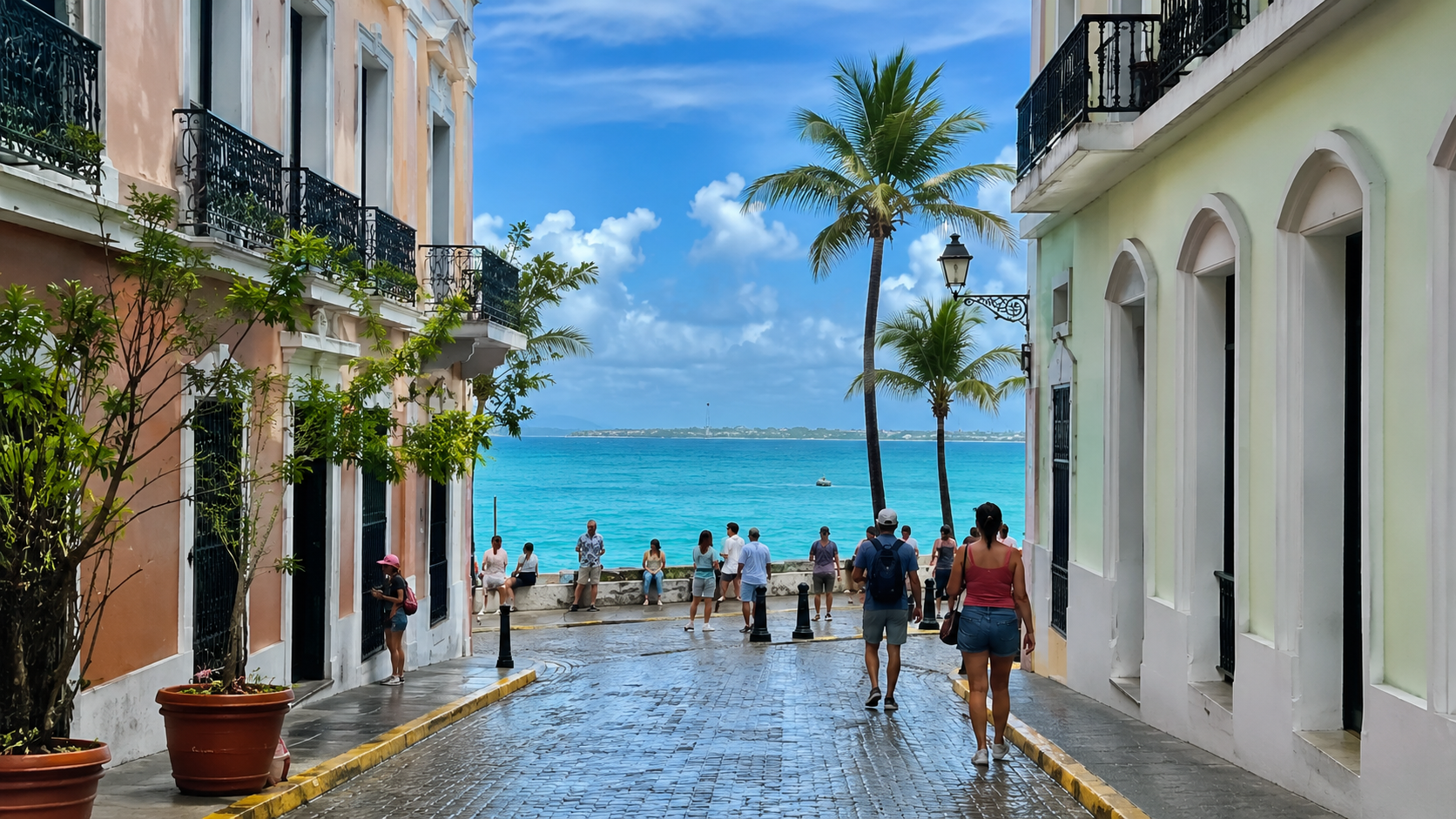
Puerto Rico offers urban history, beaches, and flights from many mainland hubs.
A mainland national park or Hawaii can work; compare travel time, access, and seasonal conditions.
A U.S. citizen can take a rewarding trip without getting a passport by staying within the United States and certain U.S. territories. The strongest choices are Puerto Rico, the U.S. Virgin Islands, Hawaii, Alaska, Washington, D.C., New Orleans, San Diego, and a well-matched national park. The right answer depends less on a universal ranking than on your starting airport, season, budget, and tolerance for long travel days.
“Without a passport” does not mean “without documents.” Airlines, cruises, ferries, rental companies, and security checkpoints have their own identification requirements. A route that touches a foreign port may change what you need. Confirm requirements with the relevant government agency and carrier before paying.
| Place | Strongest fit | Main planning issue |
|---|---|---|
| Puerto Rico | History, food, beaches, bilingual culture | Island transportation and storm season |
| U.S. Virgin Islands | Beach-focused island time | Ferries, limited inventory, local driving |
| Hawaii | Landscapes and a longer milestone trip | Long flights, inter-island logistics, costs |
| Alaska | Wildlife, scenery, road or cruise planning | Distance, weather, seasonal access |
| Washington, D.C. | Museums and a car-light city break | Event dates and timed-entry needs |
| New Orleans | Food, music, architecture | Heat, storms, festivals, late-night safety plan |
| San Diego | Mild coastal city variety | Neighborhood distances and parking |
| National parks | Hiking, scenery, dark skies | Permits, closures, weather, vehicle needs |
Puerto Rico combines Old San Juan, beaches, mountain communities, food traditions, and tropical landscapes without an international border crossing for U.S. citizens traveling directly from the mainland. It works especially well when a group wants both a city base and outdoor time. Spanish is widely spoken, while English is common in visitor settings; learning courteous Spanish phrases remains worthwhile.
Do not assume the whole island functions like a compact resort. Decide whether the priority is San Juan, the east coast, the west, or the interior. A rental car can unlock more places but adds parking and driving considerations. Tropical weather, surf, flooding, power interruptions, and closures deserve a backup day. Confirm current local guidance rather than relying on an old itinerary.
St. Thomas, St. John, and St. Croix offer different versions of a Caribbean trip. St. Thomas is a common transport gateway; St. John emphasizes protected landscapes; St. Croix can reward travelers who want more room to explore. Island-hopping looks simple on a map but ferry schedules, luggage, transfers, and sea conditions can consume meaningful time.
Choose one island for a short stay. Check the rules for the exact route, especially if a cruise or ferry visits a foreign territory. Driving conventions, road conditions, limited rental inventory, sun exposure, and hurricane-season risk are practical matters—not reasons to avoid the trip, but reasons to plan it deliberately.
Hawaii is domestic travel with distinct local history and living cultures. Pick an island based on the experience rather than trying to collect several: Oʻahu can combine Honolulu, history, food, and beaches; Hawaiʻi Island has large geographic scale and volcanic landscapes; Maui and Kauaʻi require careful review of current community conditions and access.
A five-night trip can feel short after a long flight and time change. Price ground transportation before buying airfare, follow land-access rules, and use Native Hawaiian place names respectfully. Avoid trespassing for a photograph or treating sensitive places as scenery without context.
Alaska suits travelers who want landscapes, wildlife viewing, rail journeys, road travel, or a carefully chosen cruise. It is not one interchangeable destination. Anchorage, Fairbanks, Southeast Alaska, and the national parks require different routes. Distances are large, weather shifts quickly, and some services operate seasonally.
Build around one region and one high-priority experience. Wildlife is never guaranteed. Keep safe distances and follow park or guide direction. A cruise that calls at Canada or another country can have different document requirements from a domestic flight, so examine the full itinerary rather than the marketing headline.
Washington offers museums, monuments, neighborhoods, and public transportation in a compact city framework. Many major institutions do not charge general admission, but “free” can still require timed entry. Lodging location can matter more than its nightly headline price because long transfers drain a weekend.
Group each day geographically and leave security-screening time. The city is useful for families, solo travelers, and first-time city visitors because the core plan can remain simple. Browse Open Path’s United States destination collection to compare it with other domestic choices.
New Orleans provides a strong short-trip identity without requiring a car for every visitor. The French Quarter is only one part of the city. A balanced visit makes room for music, Creole and Cajun culinary context, neighborhood respect, and the city’s complex history. Our New Orleans weekend guide explains a manageable first route.
Weather and major festivals can transform prices, availability, and pace. Plan a safe return after evening activities, stay aware around crowds, and never treat residential areas or disaster history as entertainment.
San Diego can blend beaches, parks, neighborhoods, museums, and food. It is less compact than a quick glance suggests. Choose a base after mapping two priorities and deciding whether transit, rides, or a car makes sense. The San Diego weekend guide offers a focused starting point.
Coastal conditions vary by season and beach. Check water quality, surf, parking restrictions, and lifeguard information locally. Mild climate does not eliminate sun, cold-water, or marine hazards.
A park close enough to drive can create the easiest no-passport trip of all. Great Smoky Mountains, desert parks, mountain parks, lakeshores, and historic sites offer very different conditions. Select one that fits the month, ability level, and available equipment—not a social-media list.
For a realistic short route, see the Great Smoky Mountains weekend guide. Read official alerts for roads, permits, fire, air quality, wildlife, and seasonal services. Have an alternative that does not depend on one trail.
Begin with the hours you truly have. A distant island may consume two vacation days, while a regional city yields a full first afternoon. Next compare complete cost: airfare or fuel, every transfer, lodging after mandatory fees, food, activities, and a contingency. Finally test seasonal fit. A place can be excellent overall and wrong for your particular week.
If several options remain, use the free Travel Compass to weigh budget, pace, interests, transportation comfort, and travel confidence. Travelers who prefer a researched plan built around their constraints can request a Personalized Travel Blueprint.
Domestic travelers still need identification accepted by their carrier and the Transportation Security Administration. Children, unaccompanied minors, name mismatches, cruises, and routes through foreign ports deserve separate attention. Do not treat a blog—including this one—as the final authority. Consult TSA, the State Department when an itinerary touches foreign territory, the carrier, and the cruise or ferry operator.
Bring backup copies of reservations and emergency contacts without exposing sensitive numbers. Make sure the name on a ticket matches the identification you plan to use. If immigration status, citizenship, custody, or legal documentation complicates travel, get advice from the appropriate authority before booking.
A passport can still be useful as backup identification and for future travel, but obtaining one is a separate decision. Never book an international substitute on the assumption that expedited processing will succeed by a desired date.
For direct domestic travel, U.S. citizens generally do not use a passport to enter Puerto Rico. Acceptable airline identification rules still apply, and an itinerary that passes through another country can be different. Verify the route and current official rules.
Rules depend on citizenship, territory, route, and mode of travel. Do not generalize from Puerto Rico or the U.S. Virgin Islands to every territory. Check official guidance for your exact destination and connections.
Documentation depends on the itinerary, ports, citizenship, and cruise line, and a passport may be strongly recommended even where another document is accepted. Confirm directly rather than relying on the phrase “closed loop.”
There is no honest universal winner. Your origin, dates, group size, bags, lodging, and local transportation determine the total. A nearby Texas coast trip, for example, may beat an island flight; compare Galveston and Corpus Christi if that route fits.
Prices, identification rules, schedules, operating hours, weather, road and trail conditions, closures, entry policies, and availability can change. Verify decision-critical details with official agencies, carriers, parks, lodging providers, and local operators immediately before booking and departure.
Compare another route, destination, or travel style before you book.
article guideCompare Christmas towns in America for lights, markets, snow, and family trips, with honest guidance on dates, weather, crowds, and costs.
 article guide
Compare America’s best fall getaways for foliage, mountains, cities, coast, and warmth, with realistic timing, budget, and weather advice.
 article guide
Compare U.S. spring trips for wildflowers, cities, coast, and parks, with honest advice on weather, crowds, timing, and budgets.