 article guide
Best Christmas Towns to Visit in America
Compare Christmas towns in America for lights, markets, snow, and family trips, with honest guidance on dates, weather, crowds, and costs.
A practical sequence for choosing, budgeting, booking, and enjoying a two- or three-day trip without overloading the schedule.
15–18 minute read
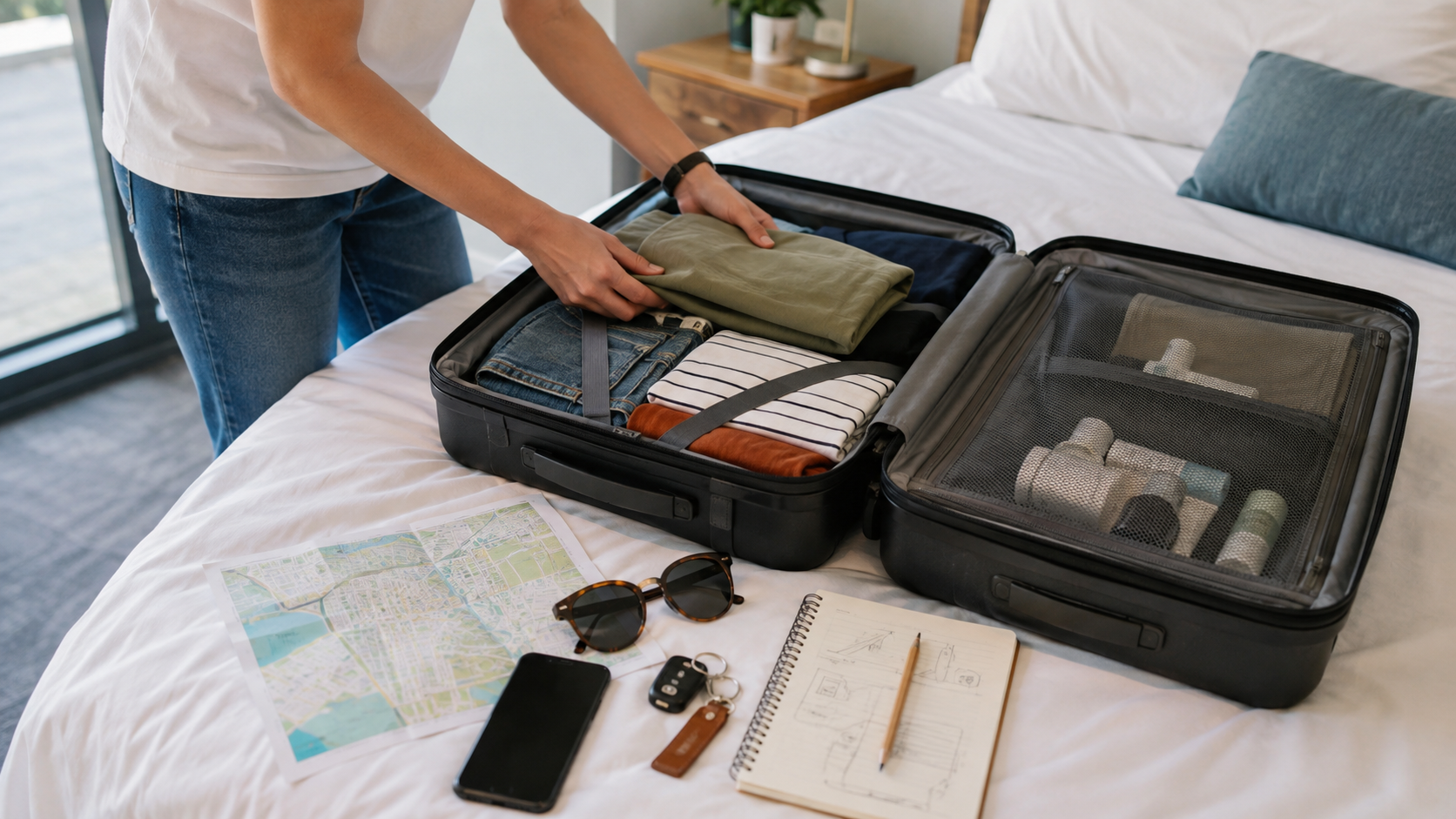
Set a total budget, choose a destination with an easy route, select one priority experience, verify the logistics, and book only after the complete plan works.
For most weekends, one major activity and two flexible supporting stops are enough.
Book the scarce, expensive, or trip-defining essentials first, preferably with workable cancellation terms.
A good weekend trip starts with constraints, not a long list of attractions. Confirm exactly how much time and money you have, choose a destination that is easy to reach, build the weekend around one priority, and leave enough margin for ordinary travel friction. Then verify current conditions and book only the parts that genuinely need a reservation.
This sequence works because a weekend is short. Every extra transfer, distant neighborhood, and timed commitment consumes a larger share of the trip than it would on a weeklong vacation. The goal is not to fit the most into 48 hours. It is to make the available hours feel worthwhile.
Write one sentence that describes the desired result: “I want two relaxed days near the water,” “We want a food-focused city break,” or “I want an easy first solo trip with no car.” This is a decision filter. A destination may be appealing yet wrong for this weekend.
Next, mark the true departure and return window. Friday evening is not usable trip time if work ends late, the airport is an hour away, or the driver needs rest. Sunday evening is not fully available if you need to shop, care for family, return a rental car, or prepare for Monday. Use door-to-door time rather than scheduled flight time or map time.
Identify nonnegotiables separately from preferences. Accessibility, medication storage, pet care, dietary needs, driving limits, documentation, and a hard spending ceiling are constraints. A rooftop dinner or a particular museum might be a preference. Protect the first group before shopping for the second.
Choose a total you can spend without borrowing from essential bills. Reserve a contingency before dividing the rest. The exact buffer depends on the route and your circumstances, but it must be enough to handle a plausible meal, safe ride, minor delay, or price difference.
Use these categories:
| Category | Include |
|---|---|
| Long-distance transport | Fuel, charging, tolls, ticket, bags, seat fees, airport access, rental car and insurance decisions |
| Lodging | All nights, taxes, mandatory fees, parking and required deposits |
| Local movement | Transit fares, rides, parking, fuel, bike rental or accessibility transport |
| Food | Travel-day food, meals, snacks, water and tips where customary |
| Experiences | Admissions, reservations, permits, rentals and event fees |
| Contingency | Money not assigned to optional purchases |
Do not make the activity budget from whatever is left after booking an attractive room. Draft the whole weekend on one page first. Our guide to how much a weekend trip costs explains the calculation in greater depth, while how to travel on a budget offers broader cost controls.
Start with three candidates, not twenty. Each should serve the trip sentence and be practical from your origin. Compare them on usable hours, total route burden, likely lodging area, seasonal conditions, and how much there is to do without constant paid admission.
Destination guides are useful for understanding trip shape. Browse the Open Path destination guides to see realistic weekend structures. Texas travelers might start with the Texas guide hub and compare cities, beaches, and smaller towns without assuming that the nearest place is automatically the easiest.
Use a comparison page when two options seem similar. For example, Austin versus San Antonio separates the experiences and logistics rather than declaring a universal winner. If you want a guided shortlist, the free Travel Compass weighs budget, pace, interests, transportation comfort, and travel confidence.
Eliminate a candidate when its appeal depends on an unavailable event, an unsafe pace, uncertain accommodation, or money outside the ceiling. A shorter shortlist makes live-price research manageable.
Compare driving, flying, rail, and bus only where they are genuinely available. Measure door to door. A one-hour flight can involve an early airport arrival, transfers, waiting, baggage collection, and a distant airport. A three-hour drive can become longer with traffic and stops. The right choice depends on the complete route, not the fastest segment.
| Question | Driving | Flying |
|---|---|---|
| What is the full cash cost? | Fuel, tolls, parking, vehicle wear considerations | Fare, bags, seats, airport trips, local transport |
| What time is consumed? | Stops, traffic, parking | Airport access, security, waiting, transfers |
| What can disrupt it? | Weather, congestion, vehicle issue, fatigue | Delays, cancellation, missed connection, baggage issue |
| What flexibility remains? | Departure and local movement may be flexible | Ticket rules and schedules may constrain changes |
The detailed road trip versus flying comparison includes a break-even worksheet. Whichever route you choose, plan a safe fallback. A bargain is not worthwhile if it requires fatigued driving or an impossible connection.
Pin your anchor experience, arrival point, likely dinner, and departure route on a map. Look for a lodging area that reduces repeated movement. Central is not always best: the “center” shown by a booking platform may not be the neighborhood relevant to your trip. Conversely, a cheaper outer room can become expensive after parking and rides.
Compare the final price, not the first nightly rate. Read the room type, accessibility information, check-in window, parking rules, cancellation deadline, and deposit policy. Verify important details directly with the property when the trip depends on them. Do not assume luggage storage, breakfast, a shuttle, or late arrival is included.
Safety is more specific than labels such as “good area.” Consider the exact route between transit and lodging, lighting, late-night arrival, mobility needs, reliable transportation, and recent official notices. If a plan feels too fragile, choose a different base or destination.
Use anchors and options. An anchor is the main reason for the trip or a time-sensitive commitment. An option is a nearby place that can be skipped without disappointment. A simple two-night framework might look like this:
Travel, check in, eat somewhere convenient, and take a short orientation walk only if conditions and energy allow. Do not make the weekend depend on a prepaid Friday reservation after a delay-prone journey.
Schedule the anchor when your energy is best. Place lunch and one nearby option around it. Leave a substantial open block. This accommodates a longer meal, weather change, interesting discovery, or rest.
Pick a market, neighborhood, easy trail, or museum that does not put the return at risk. Set a leave-by time using current conditions, breaks, rental return requirements, and obligations at home.
Avoid treating meals as gaps. They take time, and popular places may involve waits. Identify backup food choices near each anchor, especially when dietary or accessibility requirements matter.
Verify facts with primary sources: the carrier, property, venue, park, transit operator, road authority, weather service, or local government. Editorial guides provide planning context but cannot maintain live inventory or conditions.
Book in the order of consequence. Usually that means transportation and lodging, followed by the one scarce trip-defining activity. But the order can reverse when a permit or event is the sole reason to travel. Check that the related pieces are available before making any of them nonrefundable.
Read change and cancellation rules before payment. Save the confirmation, total, deadline, address, contact details, and any entry instructions. Put essential information offline or on paper; a dead battery or weak signal should not prevent check-in.
Pack for the actual forecast and activities, not every possible scenario. Start with identification, payment methods, medicine, necessary documents, chargers, weather protection, appropriate footwear, and any accessibility items. Then add comfort items. The ultimate travel packing checklist provides a reusable list.
Before leaving, check weather, air quality if relevant, closures, transportation status, tickets, fuel or charge needs, and check-in instructions. Share the basic route with a trusted person when appropriate. Secure home and pet-care arrangements.
On the trip, review the next day once—not constantly. Note the first commitment, travel time, conditions, and any required item. Good preparation should create freedom rather than turn travel into administration.
Assume two adults have Friday after work through Sunday evening, want a relaxed food-and-neighborhood weekend, and will depart from a city within a few hours of two candidates. Their ceiling is $900 total. These are worksheet assumptions, not current prices.
They reserve $100 for contingency, leaving $800. Candidate A requires a flight and airport transfers; Candidate B is a manageable drive. After checking live totals, the flight would consume enough money and six door-to-door hours each way. Candidate B needs less transit time, supports a central two-night stay, and has several free neighborhoods near the priority meal.
They allocate the usable amount as follows:
| Purpose | Planning amount |
|---|---|
| Complete driving cost and parking | $150 |
| Lodging after taxes and fees | $390 |
| Meals | $190 |
| One admission | $50 |
| Flexible local spending | $20 |
| Protected contingency | $100 |
| Total ceiling | $900 |
If the live lodging total is $450, they do not quietly exceed the plan. They can choose one night, another date, a different base after calculating local transport, or Candidate A only if its complete numbers improve. The value of a worksheet is the decision it forces before money is committed.
A beautiful attraction does not prove the complete destination fits. Test the route, lodging, seasonal conditions, and what surrounds the attraction.
Two nights can contain barely one day if arrival is late and departure early. Compare actual experience time.
One delay can collapse consecutive bookings. Protect transition time and make secondary stops optional.
Taxes, fees, bags, parking, and transfers are real trip costs. Record paid totals in the same worksheet as estimates.
Calculate repeated rides, parking, time, and late-night practicality. The lowest room rate may not make the lowest-cost weekend.
Sunday fatigue, weather, rental return, traffic, and Monday obligations deserve as much attention as Friday departure.
When research time is the constraint, a Personalized Travel Blueprint can turn your origin, budget, pace, and preferences into a researched planning framework. It should support—not replace—your review of live booking terms and official conditions.
Use the arrival day for settling in, the middle day for the primary experience, and the departure day for one flexible nearby activity. A third night may widen the schedule, but do not automatically add more distant stops.
Check both before committing to either. Book the item most likely to constrain the trip only when its counterpart is workable. Avoid a nonrefundable room without a viable route or a ticket without safe lodging.
It depends on live schedules, lodging totals, traffic, events, and your energy. Compare the complete Thursday–Sunday and Friday–Monday scenarios rather than relying on a general rule.
Choose flexible bookings where practical, identify a credible indoor alternative, pack for the forecast, and set a decision point for unsafe conditions. Do not force an outdoor plan because money has been spent.
Reduce geography first. One base, one main purpose, and adjacent options usually create more calm than simply deleting meal breaks from an ambitious route.
Examples and allocations in this guide are planning illustrations, not live quotes or guarantees. Before booking or leaving, verify current prices, taxes, fees, operating hours, reservation rules, weather, transport status, road and trail closures, safety guidance, accessibility details, cancellation terms, and availability with official or primary sources.
Compare another route, destination, or travel style before you book.
article guideCompare Christmas towns in America for lights, markets, snow, and family trips, with honest guidance on dates, weather, crowds, and costs.
 article guide
Compare America’s best fall getaways for foliage, mountains, cities, coast, and warmth, with realistic timing, budget, and weather advice.
 article guide
Compare passport-free destinations for U.S. travelers, from Puerto Rico to national parks, with practical planning and document advice.