 article guide
Best Christmas Towns to Visit in America
Compare Christmas towns in America for lights, markets, snow, and family trips, with honest guidance on dates, weather, crowds, and costs.
A decision-focused shortlist of approachable U.S. destinations, with trip-fit guidance for new travelers rather than a one-size-fits-all ranking.
17–20 minute read

Choose a place with a simple route, a convenient base, several low-pressure activities, and a trip shape that fits your budget and confidence.
No. San Diego, Washington, Chicago, New Orleans, Nashville, San Antonio, Colorado Springs, and the Smokies suit different first trips.
Direct transportation, manageable geography, suitable weather, lodging fit, accessibility, and a clear reason you want to go.
The best U.S. destination for a first-time traveler is not necessarily the most famous. It is a place you genuinely want to visit that also offers a straightforward route, a practical place to stay, manageable daily geography, and enough flexibility to recover from a mistake or delay. For different travelers, that may be San Diego, Washington, Chicago, New Orleans, Nashville, San Antonio, Colorado Springs, or Great Smoky Mountains National Park.
This is a fit-based shortlist, not a ranking. Live prices, schedules, seasonal conditions, and personal needs can make any destination easy on one trip and impractical on another.
An approachable destination has forgiving logistics. A missed bus should not destroy the day. A traveler should be able to find food, return to lodging, and adjust for weather without rebuilding the whole itinerary. This does not require a small city, but it does require a focused plan.
Look for five qualities:
“Beginner-friendly” does not mean risk-free or universally accessible. Every place requires current research. It also does not mean bland. A well-matched first destination can feel ambitious while keeping the mechanics understandable.
| Destination | Strong fit for | Simplest trip shape | Main planning question |
|---|---|---|---|
| San Diego | Coast, neighborhoods, mild-paced sightseeing | One coastal or central base | Will you drive or focus on connected areas? |
| Washington, DC | Museums, history, car-light city trip | Transit-accessible base | How much walking and museum time is comfortable? |
| Chicago | Architecture, food, urban energy | Central base near priority areas | Does the season match your outdoor plans? |
| New Orleans | Food, music, distinctive culture | One compact-area weekend | How will you balance late nights, heat, and rest? |
| Nashville | Live music and social travel | Focused entertainment-area trip | Will rides, parking, or event demand change cost? |
| San Antonio | History, food, first Texas city break | Downtown-centered weekend | Will downtown alone serve the trip? |
| Colorado Springs | Scenic drives and outdoor variety | Car-based two- or three-day trip | Are altitude, weather, and driving a good fit? |
| Great Smoky Mountains | Nature and scenic road trip | One park gateway and one park area | Are roads, trails, crowds, and conditions workable? |
The table is a starting filter. It does not claim current transit performance, prices, weather, or availability.
San Diego works for travelers who want to combine waterfront time, neighborhoods, parks, and food without making nightlife or a packed attraction list the entire purpose. The city is geographically spread out, so the beginner-friendly version is deliberately smaller: choose a base and group each day into one area.
This is a good candidate when a direct route exists and you enjoy an outdoor-oriented itinerary that can include unstructured time. It is less suitable when the budget depends on crossing the region repeatedly or when you assume every coastal experience will be warm and swimmable. Marine conditions, weather, and water safety require live checks.
Use the San Diego weekend guide to see how a focused itinerary works. Before booking, compare the final lodging total, parking, rental-car needs, and transit or ride costs. Do not treat a low flight fare as the full trip price.
Washington can suit a traveler who wants major museums, monuments, history, and neighborhoods with the possibility of using transit rather than driving. Many well-known institutions may have no general admission, but timed-entry requirements, special exhibitions, transport, food, and lodging still affect the budget.
The planning challenge is physical and mental volume. Museum campuses are large; monument routes involve distance and exposure to weather. Choose one or two priority institutions per day and allow security, lines, meals, and rest. Confirm official entry rules and hours for every priority.
This is a stronger fit when the traveler is comfortable navigating a rail system and can choose lodging along a useful route. Accessibility needs should be verified with the transit operator, property, and venue. Avoid building an itinerary that zigzags between distant sites simply because they share a “must-see” label.
Chicago can introduce a first-time traveler to a large U.S. city through architecture, waterfront public space, museums, neighborhoods, and food. A central base and focused daily areas can make the trip legible without a car.
Season changes the experience substantially. Outdoor waterfront time, severe cold, heat, storms, and wind require different plans. Check current forecasts and official service information rather than relying on the city’s reputation. Identify one indoor alternative, but do not cram it onto the schedule in advance.
Chicago fits travelers comfortable with urban movement and crowds. It may be less suitable for someone who wants quiet or intends to visit far-flung neighborhoods in a short weekend. Learn the payment and service basics from official transit sources, keep late-night return options clear, and distinguish the city center from the neighborhoods that actually interest you.
New Orleans is compelling when food, music, architecture, and history are the point—not just items around a generic vacation. A first trip can focus on a few adjacent neighborhoods, a planned music experience, and time to eat without rushing.
The city rewards curiosity but should not be reduced to a party district. Read about local culture and visitor behavior, support local businesses thoughtfully, and be aware of weather and hurricane-season conditions. Heat and humidity can change walking capacity. Current event dates can change availability and price.
The New Orleans weekend guide offers a manageable structure. Verify venue schedules and age or entry requirements directly. Keep a reliable return plan after dark and do not assume a streetcar or ride will operate exactly as expected.
Nashville may suit travelers who want live music, performance history, and a lively group or solo weekend. The easiest version selects one or two music priorities and leaves room for performances discovered after arrival rather than scheduling every set.
Event calendars affect rooms, traffic, and reservations. Check your dates. Decide whether an entertainment-area base is worth its price or whether a different area plus transportation serves better. Include rides and parking in the comparison. Travelers sensitive to noise should research the exact property and room location rather than assuming central lodging will be restful.
Our Nashville weekend guide helps shape two days. Music availability, cover charges, hours, and reservations can change; verify live details with venues.
San Antonio is a useful first city break for travelers interested in Texas history, food, public spaces, and a downtown-centered itinerary. The River Walk can provide orientation, but it should not define the whole city. A thoughtful plan adds historical context and perhaps one area beyond the most visible visitor corridor.
Heat influences pace, especially during warmer periods. Build shade, hydration, and indoor breaks around current conditions. Verify official information for historic sites, including reservations or closures. A car may be unnecessary for a narrow downtown plan and useful for a broader one; calculate lodging parking and local movement both ways.
Read the San Antonio first-time weekend guide or compare San Antonio and Houston when choosing the kind of Texas city experience you want.
Colorado Springs can work for a traveler who wants dramatic scenery without making a remote backcountry itinerary the first trip. Scenic drives, public landscapes, and urban amenities can share a base. In most trip shapes, a car simplifies access.
Elevation, rapid weather changes, sun exposure, fire or road conditions, and individual health require respect. Begin with lower-intensity plans, hydrate appropriately, and avoid promising yourself a strenuous accomplishment. Official land managers are the source for current access, reservations, closures, and safety information.
The Colorado Springs weekend guide shows a restrained plan. This destination is a weaker first choice for someone uncomfortable driving in mountain weather or whose needs are not met by the available routes and facilities.
Great Smoky Mountains National Park can introduce a traveler to scenic roads, short walks, wildlife awareness, and park planning. The workable first version chooses one gateway and one portion of the park rather than trying to cover the map.
A vehicle is important for most itineraries, but congestion and parking can complicate popular areas. Weather, road closures, trail conditions, water, wildlife, and parking rules need official verification. Download or carry essential information because mobile service may be limited. Never approach wildlife or rely on an editorial itinerary for safety decisions.
Our Great Smoky Mountains weekend guide is a planning framework. A park trip can have low-cost activities yet still require significant transportation, lodging, equipment, and preparation.
Score only the factors that matter to you, from 1 (weak) to 5 (strong). Do not use a universal score published by someone whose priorities differ.
| Factor | Weight example | Candidate A | Candidate B |
|---|---|---|---|
| Direct route from home | 3 | score × 3 | score × 3 |
| Final cost fit | 3 | score × 3 | score × 3 |
| Main interest | 3 | score × 3 | score × 3 |
| Comfortable local movement | 2 | score × 2 | score × 2 |
| Weather and seasonal fit | 2 | score × 2 | score × 2 |
| Flexible backup options | 1 | score × 1 | score × 1 |
Weights make priorities visible; they do not create objective truth. A lower-scoring destination may still win because of family, a meaningful event, or better live availability.
For a broader method, read how to choose the perfect vacation destination. The Travel Compass performs a similar fit exercise with a guided set of questions.
Assume one first-time traveler has a $1,000 ceiling for two nights. They reserve $120 for contingency. Candidate A is a car-light city with a direct arrival; Candidate B needs a flight plus rental car; Candidate C is within driving range but rooms are expensive on the chosen event weekend.
After checking live totals, they create this illustrative comparison:
| Cost pressure | Candidate A | Candidate B | Candidate C |
|---|---|---|---|
| Long-distance route | Medium | High | Low |
| Local movement | Low | High | Medium |
| Lodging on dates | Medium | Medium | High |
| Free/low-cost interest fit | High | Medium | High |
| Usable hours | High | Medium | High |
Candidate A is not “best in America”; it is best for these assumptions. The traveler can choose it, change Candidate C’s date, or raise the budget intentionally. They should not remove the buffer and hope.
Use the complete method in how much a weekend trip really costs. Compare final lodging, route, food, and experience totals instead of searching for a destination with a permanent budget label.
Choosing prestige instead of fit. A bucket-list name cannot compensate for a route, weather, cost, or pace you dislike.
Planning multiple cities. Switching hotels and transport consumes time. Learn one base before creating a complex loop.
Assuming transit or a car is always easier. The answer is destination- and traveler-specific. Verify routes, parking, service hours, and accessibility.
Scheduling every famous attraction. One or two priorities create a trip. A checklist creates unnecessary crossings and prepaid pressure.
Ignoring arrival night. Late check-in, food, safe transport, and fatigue need a plan.
Treating price labels as permanent. “Affordable” and “expensive” change by origin, date, inventory, and trip style.
Letting uncertainty become danger. Ask the property, carrier, venue, or land manager when an important detail is unclear.
If choosing and researching still feels overwhelming, a Personalized Travel Blueprint can organize options around your starting point and needs without changing the need to confirm live details yourself.
No. A nearby place can teach booking, navigation, lodging, budgeting, and flexible itinerary skills with lower route friction. Meaning comes from attentive travel, not mileage.
Washington and Chicago can support many car-light plans, while parts of San Diego, New Orleans, Nashville, and San Antonio may work with a focused base. Exact needs vary. Review official service, walking demands, late hours, and accessible alternatives. The Dallas without a car guide demonstrates how to test a car-free claim.
Choose the arrangement that supports your confidence and goals. A companion can share decisions and fixed costs; solo travel offers control. Neither removes the need for safety, communication, and financial preparation. See how to plan your first solo trip if traveling alone.
You need a framework: arrival, lodging, one anchor per day, meals, movement, and safe return. Secondary stops can remain optional.
Reduce geography and commitments. Confirm the essential route, choose one nearby experience, and allow rest. Contact providers about changes according to their terms rather than disappearing from a reservation.
Destinations here are planning suggestions, not safety, accessibility, price, weather, or availability guarantees and not a universal ranking. Verify live prices, taxes, fees, hours, transit, event schedules, weather, air quality, road and trail closures, entry rules, safety guidance, accessibility, and availability with official and primary sources before booking or travel.
Compare another route, destination, or travel style before you book.
article guideCompare Christmas towns in America for lights, markets, snow, and family trips, with honest guidance on dates, weather, crowds, and costs.
 article guide
Compare America’s best fall getaways for foliage, mountains, cities, coast, and warmth, with realistic timing, budget, and weather advice.
 article guide
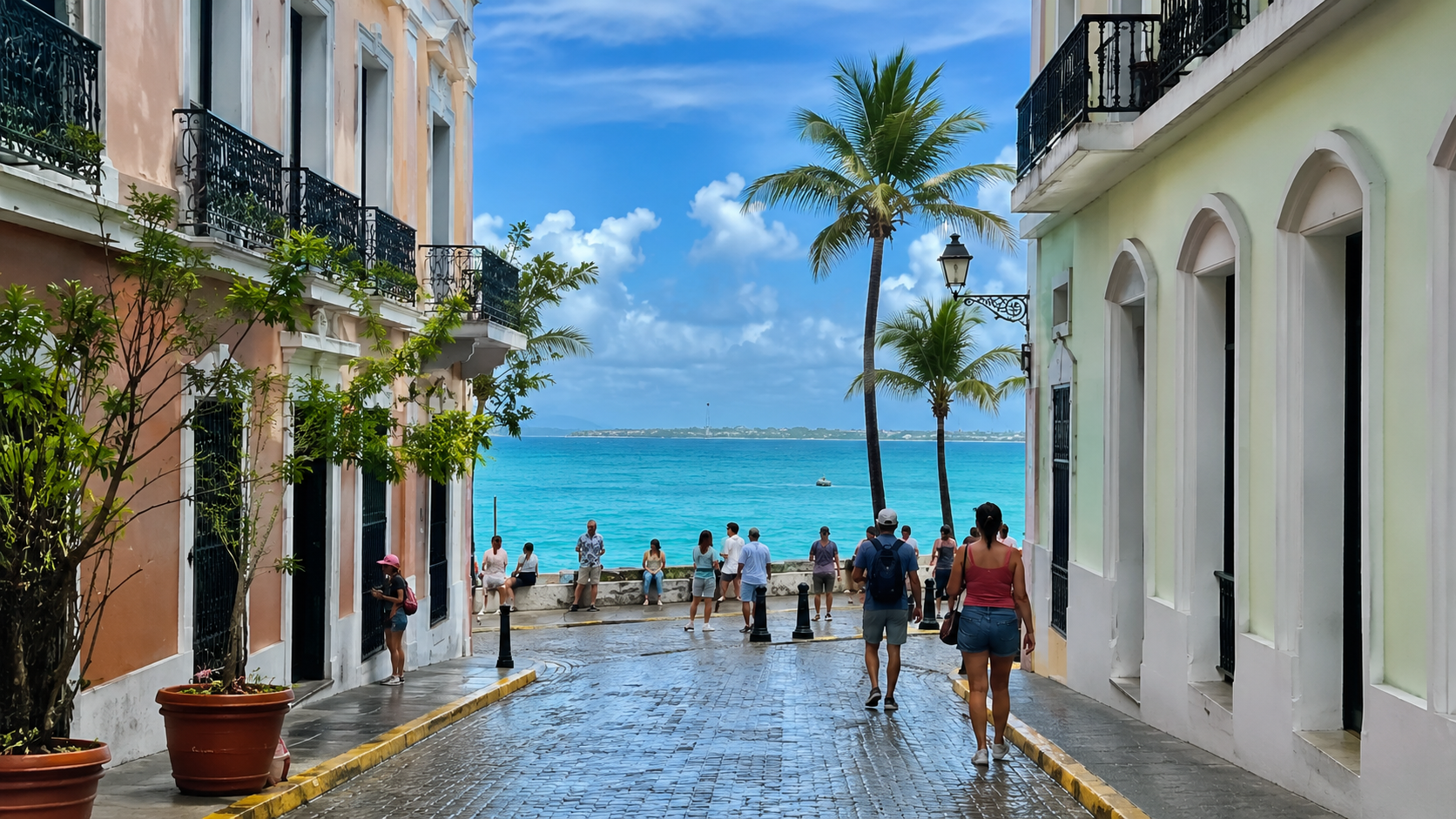
Compare passport-free destinations for U.S. travelers, from Puerto Rico to national parks, with practical planning and document advice.